





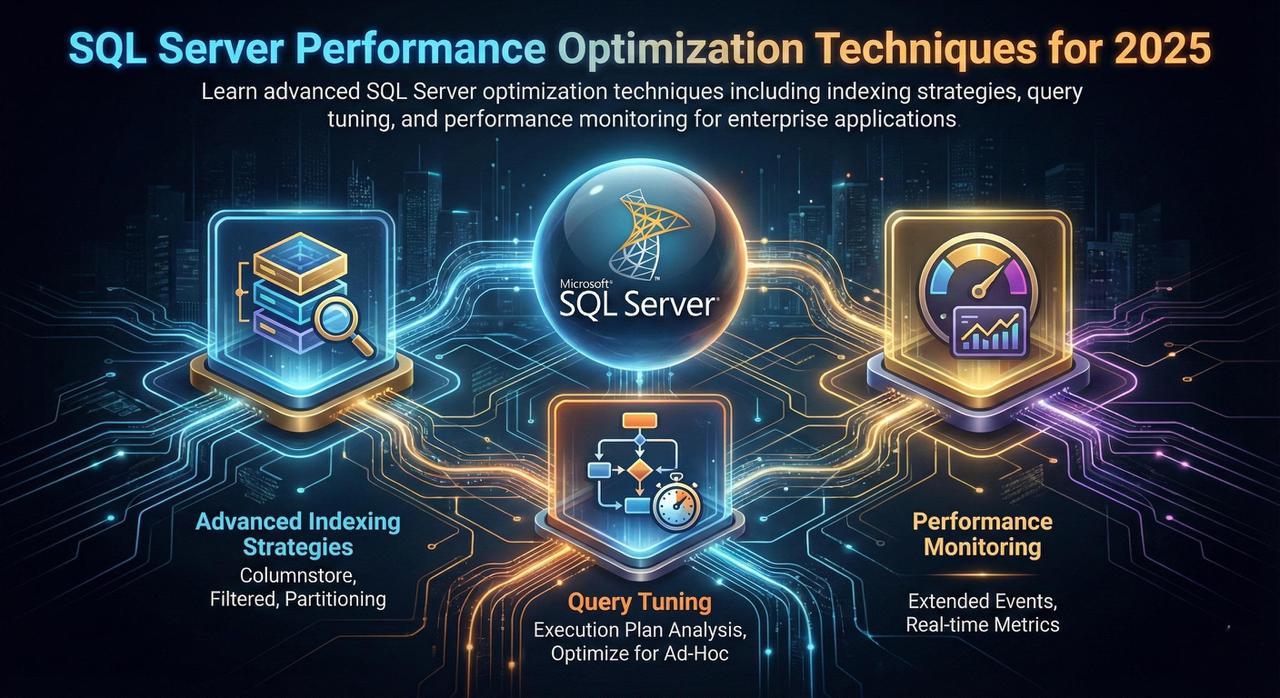
SQL Server remains a cornerstone of enterprise data management. Optimizing its performance is crucial for applications that handle millions of transactions daily. This comprehensive guide covers proven techniques to maximize your SQL Server performance.
Understanding SQL Server Performance
Database performance optimization is both an art and a science. It requires understanding how SQL Server processes queries, manages memory, and handles I/O operations. The key is to identify bottlenecks and address them systematically.
Performance Impact
Properly optimized databases can see 10x to 100x performance improvements. A query that takes 30 seconds can often be reduced to milliseconds with the right indexing and query optimization strategies.
Indexing Strategies
Proper indexing is the foundation of SQL Server performance. Understanding when and how to create indexes can dramatically improve query execution times.
Clustered vs Non-Clustered Indexes
Choose your clustered index wisely—you only get one per table. It should be on columns that are frequently used in range queries and ORDER BY clauses. Non-clustered indexes are perfect for columns used in WHERE clauses and JOINs.
-- Create a covering index for better performance
CREATE NONCLUSTERED INDEX IX_Orders_CustomerDate
ON Orders (CustomerID, OrderDate)
INCLUDE (TotalAmount, Status, ShippingAddress)
WHERE Status = 'Active';

-- This index covers the following query completely
SELECT CustomerID, OrderDate, TotalAmount, Status
FROM Orders
WHERE CustomerID = @CustomerID
  AND Status = 'Active'
ORDER BY OrderDate DESC;
Query Optimization Techniques
-
1
Use SET STATISTICS IO ON
Identify queries with high logical reads. High logical reads indicate missing indexes or inefficient query plans.
-
2
Avoid SELECT *
Only retrieve columns you need. This reduces I/O and allows SQL Server to use covering indexes more effectively.
-
3
Use EXISTS Instead of IN
For subqueries, EXISTS is often faster because it stops processing once a match is found.
-
4
Parameterize Queries
Prevent SQL injection and improve plan caching. Parameterized queries allow SQL Server to reuse execution plans.
-
5
Avoid Functions on Indexed Columns
Functions on columns in WHERE clauses prevent index usage. Use computed columns or rewrite queries instead.
Execution Plan Analysis
Understanding execution plans is crucial for query optimization. Look for these warning signs:
Table Scans
Full table scans on large tables indicate missing indexes. Add appropriate indexes to convert scans to seeks.
Sort Operations
Expensive sort operations can be eliminated by creating indexes that match the ORDER BY clause.
Key Lookups
Key lookups indicate the need for covering indexes. Include frequently accessed columns in the index.
Memory Grants
Large memory grants can cause queries to wait. Optimize queries to reduce memory requirements.
Performance Monitoring Tools
Regular monitoring helps identify issues before they become critical:
Query Store
Built-in feature to track query performance over time. Identify regressed queries and force good execution plans. Essential for troubleshooting performance issues.
Extended Events
Lightweight event-handling system for monitoring and troubleshooting. Capture detailed information about query execution with minimal overhead.
Conclusion
SQL Server optimization is an ongoing process. By implementing these techniques and continuously monitoring performance, you can ensure your database handles growing workloads efficiently.
Remember that optimization is iterative—start with the biggest bottlenecks, measure the impact of changes, and continue refining. With proper indexing, query optimization, and monitoring, your SQL Server can handle enterprise-scale workloads with ease.

